Exploring Holography and Human Scanners for Enhanced Health Protection
- Steven Mwikwabe

- Apr 26
- 3 min read
Health protection has become a critical priority worldwide, especially in public spaces and healthcare settings. Technologies that can detect health risks quickly and accurately are essential to prevent the spread of diseases and ensure safety. Two emerging tools in this field are holography and human scanners. These technologies offer new ways to monitor health conditions without invasive procedures, improving both efficiency and comfort for individuals.
This article explores how holography and human scanners work, their applications in health protection, and the benefits they bring to public health and personal safety.
How Holography Works in Health Monitoring
Holography is a technique that records and reconstructs light waves to create three-dimensional images. Unlike traditional photography, holography captures depth and spatial information, allowing detailed visualization of objects or environments.
In health monitoring, holography can create 3D images of the human body or specific organs. This capability helps medical professionals observe physical conditions without direct contact. For example, holographic imaging can assist in:
Visualizing skin conditions or wounds in detail
Monitoring respiratory movements and chest expansion
Detecting abnormalities in body posture or gait
The non-invasive nature of holography makes it suitable for continuous health monitoring in crowded places like airports, hospitals, or workplaces. It can also support telemedicine by providing doctors with detailed 3D images remotely.
Human Scanners and Their Role in Health Protection
Human scanners are devices designed to detect health-related information from individuals quickly. These scanners often use a combination of sensors, cameras, and software algorithms to assess vital signs or identify potential health risks.
Common types of human scanners include:
Thermal scanners that measure body temperature to detect fever
Infrared scanners that monitor blood flow or oxygen levels
Millimeter-wave scanners that can detect concealed objects or abnormalities beneath clothing
In health protection, human scanners are widely used for screening purposes. For example, during infectious disease outbreaks, thermal scanners help identify people with elevated temperatures, a common symptom of infection. This early detection can prevent the spread of illness in public spaces.
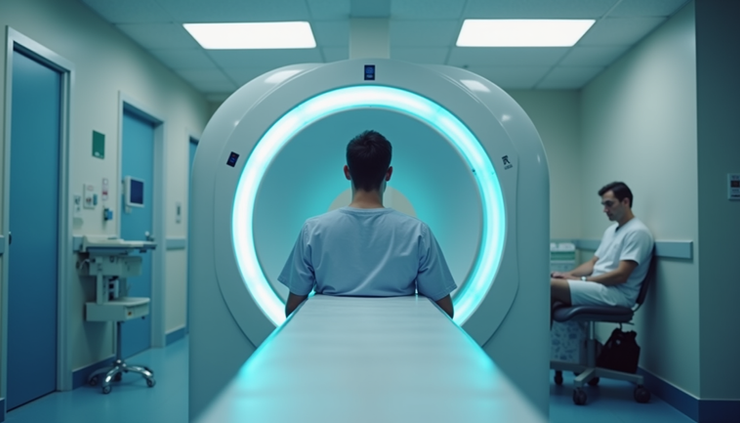
Human scanner device in use for health screening
Combining Holography and Human Scanners for Better Results
Integrating holography with human scanners enhances the accuracy and scope of health protection measures. Holography adds a layer of detailed visualization that complements the data collected by scanners.
For instance, a combined system could:
Use thermal scanning to detect elevated body temperature
Employ holography to analyze posture or breathing patterns in 3D
Provide real-time alerts if abnormal signs are detected
This combination allows for a more comprehensive health assessment without physical contact. It also reduces false positives by cross-verifying symptoms through different technologies.
Practical Applications in Public Health and Safety
Several real-world examples show how holography and human scanners improve health protection:
Airports and transportation hubs use thermal scanners to screen travelers for fever. Adding holographic imaging can help identify respiratory distress or other visible symptoms.
Hospitals implement human scanners to monitor patients continuously, reducing the need for frequent manual checks and minimizing infection risks.
Workplaces adopt these technologies to maintain safe environments by detecting early signs of illness among employees.
Public events benefit from quick screening methods that do not disrupt crowd flow but ensure safety.
These applications demonstrate how technology supports public health efforts by enabling early detection and reducing transmission risks.
Challenges and Considerations
While promising, holography and human scanners face some challenges:
Privacy concerns arise from scanning individuals in public spaces. Clear policies and data protection measures are necessary.
Accuracy limitations mean these technologies should complement, not replace, traditional medical assessments.
Cost and accessibility can limit widespread adoption, especially in low-resource settings.
Technical expertise is required to operate and maintain these systems effectively.
Addressing these issues is essential to maximize the benefits of holography and human scanners in health protection.
Future Directions and Innovations
Research continues to improve holography and human scanner technologies. Some exciting developments include:
Portable holographic devices for home health monitoring
AI-powered scanners that analyze data instantly and provide personalized health advice
Integration with wearable devices for continuous health tracking
Enhanced imaging techniques that reveal deeper physiological details
These innovations will make health protection more proactive, personalized, and accessible.


Comments